
Why Nobody Lives in America's Newest Luxury Skyscrapers: Oceanwide Plaza Downtown LA
Los Angeles, California
34.0430 N, 118.2672 W
Across from Crypto.com Arena in downtown Los Angeles stand three glass towers built for luxury residents who never arrived. Oceanwide Plaza was meant to contain high-end condominiums, a five-star hotel, shops, restaurants, and one of the most prominent addresses in the city.
Construction stopped in 2019 with the buildings close enough to completion to dominate the skyline but too unfinished to occupy. In late 2023, graffiti writers entered the site and covered floor after floor with enormous tags. The abandoned development became known as the Graffiti Towers.
Oceanwide Plaza is not an isolated construction failure. It sits at the end of a much longer experiment in clearing downtown neighborhoods, rebuilding them for offices and wealthy residents, and repeatedly discovering that real estate designed for an imagined market does not create a functioning city by itself.
Bunker Hill Was a Neighborhood Before It Was a Project
Bunker Hill once rose above downtown as a dense residential district of Victorian houses, apartment buildings, and boarding rooms. It became home to thousands of working-class and elderly residents who could afford its aging buildings and walk to jobs in the city center.
Writers including John Fante and Raymond Chandler made the neighborhood part of the visual language of Los Angeles noir. The district was worn and undermaintained, but it was also one of the few parts of downtown where a substantial residential community still existed.
In 1959, Los Angeles approved a vast urban-renewal plan for Bunker Hill. Officials described the buildings as a health hazard and used eminent domain to remove more than 8,000 low-income residents.
The Victorians were demolished, streets were regraded, and the crown of the hill was lowered by roughly thirty feet. Angels Flight, the small funicular that connected the hill to the streets below, was dismantled and stored for twenty-seven years.
Urban Renewal Built a Downtown That Emptied at Night
Redevelopment replaced the old residential district with office towers, cultural institutions, plazas, and superblocks. The new skyline signaled prosperity, but much of downtown functioned primarily during business hours.
Workers arrived in the morning, entered towers from parking garages, and left after five. Empty sidewalks and separated land uses made the district feel less like a neighborhood than the Bunker Hill community it replaced.
Los Angeles began reversing that pattern with the 1999 Adaptive Reuse Ordinance. The policy made it easier to convert obsolete commercial buildings into apartments and lofts. Residents returned, restaurants and shops followed, and downtown gained the population it had lost through clearance.
The success produced a new risk. Developers began treating the return of downtown living as an unlimited market for expensive towers aimed at wealthy domestic and international buyers.
Oceanwide Plaza Was the Largest Bet on Figueroa
Chinese developer Oceanwide Holdings planned three towers on Figueroa Street beside the arena and the Los Angeles Convention Center. The roughly $1.2 billion project promised luxury condominiums, a Park Hyatt hotel, retail space, and elevated gardens.
Construction began during a wave of Chinese investment in overseas real estate. Downtown Los Angeles appeared to offer a rare combination: a growing residential population, major sports and entertainment venues, and land positioned for international attention.
The financing depended on capital continuing to move out of China. When the Chinese government tightened controls on overseas investment, Oceanwide struggled to fund construction. Contractors reported unpaid bills, liens accumulated, and work stopped in 2019.
The towers were too advanced to disappear and too incomplete to earn revenue. Their exposed interiors remained above one of the busiest entertainment districts in Los Angeles as legal claims and financing efforts dragged on.
The Market Changed Around the Empty Towers
Downtown's real-estate assumptions weakened after construction stopped. Remote work reduced demand for office space. High vacancy pushed owners to discount buildings, while retailers struggled with fewer daily workers and persistent public-safety concerns.
The district's last traditional department store closed after 123 years. Trophy office properties sold or were valued at fractions of earlier expectations. Luxury apartments still attracted residents, but often at prices below the forecasts used to justify the boom.
Oceanwide Plaza therefore became stranded twice: first by the loss of its original financing, then by a market less willing to pay the prices required to rescue it.
Graffiti Made the Private Failure Impossible to Ignore
Taggers entered the development in December 2023 and began painting names across the towers' window lines. Within weeks, graffiti stretched across at least 27 floors and was visible throughout downtown.
The site also attracted trespassers and base jumpers. Los Angeles spent public money securing a privately owned project while the images spread internationally ahead of the 2028 Olympic Games.
The paint did not cause Oceanwide Plaza's abandonment. It made years of financial and regulatory failure legible from miles away. Three buildings designed to exclude anyone without extraordinary wealth became accessible mainly to people entering without permission.
The Towers Repeat the Logic of Bunker Hill
Oceanwide Plaza eventually moved through bankruptcy and sale at a steep discount from its original cost. Any new owner still faces the expensive work of securing, repairing, and completing structures left exposed for years.
The surrounding district continues to change. Apartments fill when prices match what residents can pay, older offices wait for conversion, and Angels Flight still climbs a hill whose original neighborhood was removed in the name of modernization.
The lesson of Oceanwide Plaza begins before its foundations. Los Angeles cleared thousands of residents from Bunker Hill to create a downtown for corporate towers, then spent decades trying to restore the residential life it had erased. The newest luxury development failed because it repeated the same mistake at another scale: it treated buildings as the city and assumed people would appear once the glass was finished.
The glass was never finished. The people who finally entered were the ones the project had never planned to admit.
Previous
Sears Documentary: How the Richest Retailer in America Went Broke
Chicago, Illinois
Next
Rondo St. Paul: How One Highway Killed This American Neighborhood
St. Paul, Minnesota
Related Stories
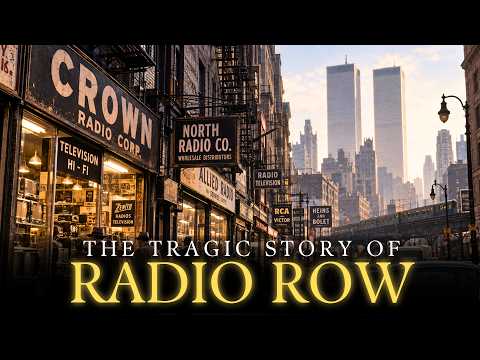
Lower Manhattan, New York
Why New York Hated The Twin Towers: Radio Row Documentary
Radio Row was America's dense marketplace for radios, televisions, surplus parts, and electronic invention. A deal to rescue a commuter railroad moved the World Trade Center directly onto its blocks.
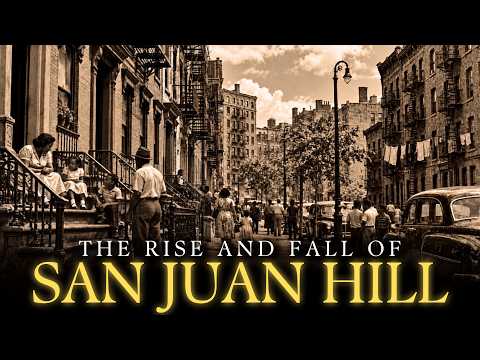
Lincoln Square, Manhattan, New York
This Famous Neighborhood Is Buried Under Lincoln Center: San Juan Hill Documentary
San Juan Hill nurtured Black music, Puerto Rican life, and generations of working families. A Robert Moses-led urban renewal project displaced thousands and delivered the cleared land to Lincoln Center.
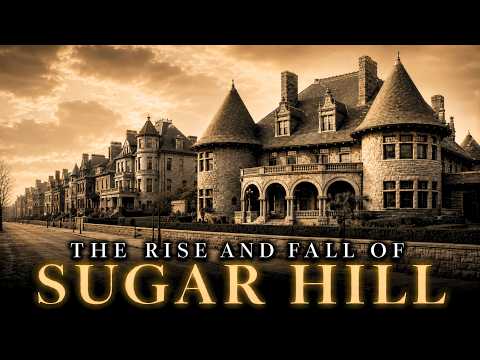
West Adams, Los Angeles, California
The Neighborhood Buried Under the Santa Monica Freeway: Sugar Hill Documentary
Black homeowners defeated the racial covenants aimed at removing them from Los Angeles' Sugar Hill. Less than twenty years later, the Santa Monica Freeway demolished the neighborhood's core.