
This Famous Neighborhood Is Buried Under Lincoln Center: San Juan Hill Documentary
Lincoln Square, Manhattan, New York
40.7725 N, 73.9835 W
Lincoln Center presents itself as a monumental home for opera, orchestral music, theater, dance, and education. Its plazas occupy part of a former West Side neighborhood known as San Juan Hill, where Black, Puerto Rican, and Japanese American residents built a dense working-class community.
Urban renewal officials labeled the area blighted, acquired the land, and cleared thousands of homes and hundreds of businesses. The demolition also gave the makers of the 1961 film West Side Story empty buildings on which they could stage a fictional neighborhood conflict while the real neighborhood disappeared.
A Community Forms on the West Side
The exact boundaries and origin of San Juan Hill's name remain debated, but by the early twentieth century it described blocks in Manhattan's West 50s and 60s west of Columbus Circle. Black New Yorkers moved into the district after displacement from communities farther downtown and violence including the 1900 Tenderloin riot.
Tenements filled the blocks, often at extreme density. Families lived close to rail yards, warehouses, stables, factories, and the elevated structures that defined the industrial West Side. Crowding and poor maintenance were real, but the district was also a network of churches, clubs, shops, mutual aid, and performance spaces.
Philanthropist Henry Phipps funded model tenements on West 63rd Street in 1905. Settlement workers and Black nurses, including Edith Carter and Elizabeth Tyler, provided services in buildings neglected by much of the city's medical establishment.
Music Develops in Basements and Apartments
San Juan Hill became an important site in the development of Black popular music. Pianist James P. Johnson grew up in the area and played in local clubs and rent parties. His composition and dance music helped turn the Charleston into an international phenomenon.
Thelonious Monk's family moved to the neighborhood in 1922 when he was a child. The crowded West Side exposed him to churches, clubs, street musicians, and a mixture of cultural traditions that formed part of his musical education.
These achievements did not convert the neighborhood into a protected cultural district. Later accounts often remembered individual artists while treating the surrounding community as a slum awaiting removal.
Migration Changes the Neighborhood
Puerto Rican migration to New York accelerated after the Second World War, and many newcomers settled on the West Side. Japanese American families also arrived after wartime incarceration and exclusion from their former West Coast homes.
By the 1950s, the wider renewal area held more than 17,000 residents. It contained a complex mixture of older Black households, Puerto Rican families, recent arrivals, and businesses serving the neighborhood. Public housing at the Amsterdam Houses changed part of the landscape without resolving overcrowding or discrimination.
The problems officials documented—poor buildings, absentee landlords, and inadequate services—were used to justify clearance rather than sustained investment in the people already living there.
One Word Makes Clearance Possible
Title I of the Housing Act of 1949 provided federal support for cities to acquire and clear areas declared blighted. The designation converted a varied neighborhood into a single redevelopment problem and reduced land costs for a future project.
The Mayor's Slum Clearance Committee, chaired by Robert Moses, advanced the Lincoln Square Urban Renewal Project. Moses occupied overlapping public positions that allowed his organization to define the clearance area, assemble government support, and shape who would receive the land.
Residents and businesses challenged the plan. Civil-rights lawyer Harris Present argued against the removals and the process used to approve them. Opponents could contest valuations and procedures, but they struggled against agencies controlling condemnation, federal subsidies, and the redevelopment timetable.
West Side Story Films the Demolition Zone
In February 1960, the film production of West Side Story used condemned blocks near West 68th Street. Buildings awaiting demolition could be dressed with graffiti and used for exterior scenes without concern for long-term damage.
The musical was inspired by West Side gang conflict, yet its fictionalized story became better known than San Juan Hill itself. Film images preserve a physical streetscape at the moment government action had made its destruction inevitable.
Thousands Leave and Lincoln Center Arrives
President Dwight D. Eisenhower participated in Lincoln Center's ceremonial groundbreaking in 1959. Clearance moved forward around the project. Approximately 7,000 families and 800 businesses were displaced from the larger renewal area, although surviving records do not provide a complete account of where they resettled.
Relocation payments could not guarantee comparable housing nearby. Displaced residents entered a city already structured by discrimination, limited affordable housing, and other renewal projects. The community's social and commercial networks fragmented.
Lincoln Center's first major buildings opened during the 1960s. The Metropolitan Opera, New York Philharmonic, New York City Ballet, Juilliard School, and other institutions gained permanent homes within a celebrated cultural campus. Fordham University developed an adjacent campus on renewal land.
Remembering What Culture Replaced
For decades, Lincoln Center said little about the neighborhood beneath it. Recent institutional programs, oral histories, and exhibitions have acknowledged San Juan Hill and invited descendants to tell their own histories.
When David Geffen Hall reopened in 2022, a large mural honored figures connected to the neighborhood. The temporary work was removed in April 2026, demonstrating the difference between a commemorative installation and a permanent place in the landscape.
San Juan Hill was not culturally empty before a performing arts complex arrived. It had already produced music, dance, mutual aid, and community life under difficult conditions. Lincoln Center's architecture represents a major public investment in culture; the clearance records whose culture and whose homes government considered expendable to create it.
Previous
The Neighborhood Buried Under the Santa Monica Freeway: Sugar Hill Documentary
West Adams, Los Angeles, California
Next
Why New York Hated The Twin Towers: Radio Row Documentary
Lower Manhattan, New York
Related Stories
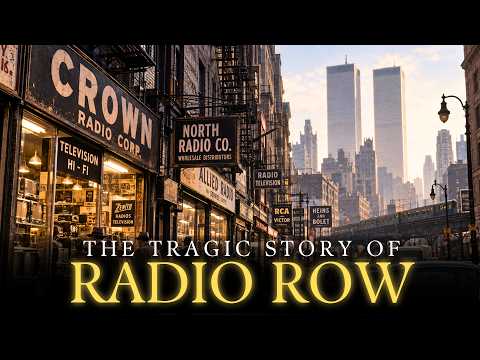
Lower Manhattan, New York
Why New York Hated The Twin Towers: Radio Row Documentary
Radio Row was America's dense marketplace for radios, televisions, surplus parts, and electronic invention. A deal to rescue a commuter railroad moved the World Trade Center directly onto its blocks.
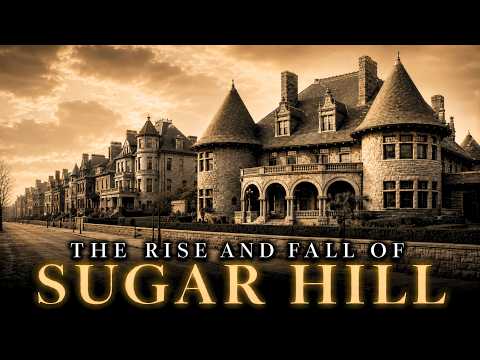
West Adams, Los Angeles, California
The Neighborhood Buried Under the Santa Monica Freeway: Sugar Hill Documentary
Black homeowners defeated the racial covenants aimed at removing them from Los Angeles' Sugar Hill. Less than twenty years later, the Santa Monica Freeway demolished the neighborhood's core.
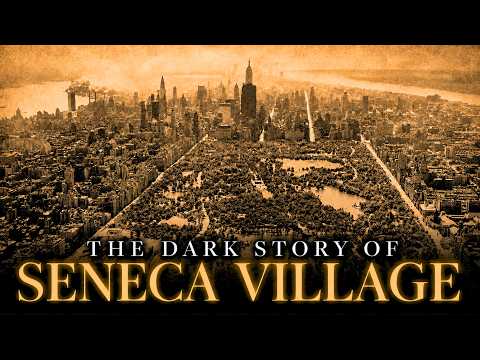
Central Park, Manhattan, New York
The Neighborhood Buried Under Central Park: Seneca Village, New York Documentary
Seneca Village was a landowning Black community with homes, churches, and a school. New York used eminent domain to clear it for Central Park in 1857, then allowed its history to disappear for generations.