
The Neighborhood Buried Under the Santa Monica Freeway: Sugar Hill Documentary
West Adams, Los Angeles, California
34.0357 N, 118.3129 W
Interstate 10 cuts through West Adams in a broad concrete trench. Before the Santa Monica Freeway, those blocks formed part of Sugar Hill, one of Los Angeles' most prominent Black neighborhoods and a center of professional, cultural, and civic life.
Residents including actor Hattie McDaniel and insurance executive Norman Houston had fought racial covenants designed to remove them from homes they legally purchased. They won a landmark California ruling in 1945. The victory did not protect the same neighborhood when highway planners arrived with eminent domain.
An Exclusive District Built with Racial Barriers
West Adams Heights was platted in 1902 as an affluent streetcar suburb southwest of downtown. Large houses rose along Harvard Boulevard, Hobart Boulevard, and surrounding streets. Deeds and neighborhood agreements attempted to restrict ownership and occupancy by people who were not white.
Racial covenants were private contracts rather than ordinary zoning. They enabled owners to ask courts to remove neighbors based on race. By the 1930s, some restrictions had expired or become vulnerable to challenge, creating openings for Black buyers able to afford the district's substantial homes.
Los Angeles' Black population was growing rapidly, but redlining and segregation confined housing choices. Doctors, lawyers, entertainers, entrepreneurs, and civil-rights leaders could possess wealth while still being excluded from many neighborhoods.
Sugar Hill Becomes Black Los Angeles' Showcase
John and Vada Somerville were central figures in the city's Black professional class. Both trained as dentists, helped found the Los Angeles branch of the NAACP, and developed the Hotel Somerville—later the Dunbar Hotel—as a center of Central Avenue life.
Norman Houston, a leader of Golden State Mutual Life Insurance, bought a West Adams house but delayed moving in while opposition continued. Other families faced threats and litigation simply for occupying property they owned.
Hattie McDaniel purchased a seventeen-room mansion on South Harvard Boulevard. In 1940 she became the first Black performer to win an Academy Award, yet segregation kept her from sitting with white cast members at the ceremony. Her Sugar Hill home became famous for gatherings that brought together leading figures from Black Hollywood.
The Covenants Go to Court
White property owners filed suit against McDaniel and other Black residents, arguing that old restrictions prohibited them from occupying their homes. Attorney Loren Miller represented the defendants and attacked both the validity and the constitutional implications of court-enforced segregation.
On December 5, 1945, Superior Court Judge Thurmond Clarke ruled for the Black homeowners. He rejected the attempt to use his court to remove them, declaring that it was time for members of the Black community to receive the rights guaranteed to them.
The ruling preceded the United States Supreme Court's 1948 decision in Shelley v. Kraemer, which held that courts could not constitutionally enforce racially restrictive covenants. Sugar Hill residents had defended their homes and helped push American housing law toward formal equality.
Highway Engineers Choose a Route
Postwar Los Angeles committed itself to an enormous freeway network. Planners drew an east-west route connecting downtown with the Pacific. Several alignments were possible, and route decisions reflected both engineering constraints and political influence.
The selected Santa Monica Freeway alignment cut through West Adams and the center of Sugar Hill. A comparable route through wealthier and predominantly white Cheviot Hills met organized resistance and was altered. Sugar Hill lacked the same political protection despite its prominent residents and expensive homes.
Highway agencies described decisions through traffic counts, curves, costs, and right-of-way needs. Those technical categories hid the unequal ability of neighborhoods to redirect a project. Communities already constrained by housing discrimination were frequently treated as the path of least resistance.
Berkeley Square and Sugar Hill Are Cleared
Berkeley Square, an enclave of twenty-two houses, fell to acquisition and demolition beginning in 1961. The freeway cut across the larger Sugar Hill area soon afterward. By 1963, much of the neighborhood's core had been removed.
Owners received compensation through eminent domain, but payment for individual structures did not recreate a community. Churches, professional relationships, social networks, and the concentration of Black political and cultural influence were scattered.
The freeway opened in 1966. Concrete retaining walls and traffic replaced residential blocks less than twenty-one years after the covenant decision had affirmed the owners' right to remain.
What Survived Beside the Trench
Not every Sugar Hill landmark was demolished. Hattie McDaniel's mansion remains standing north of the freeway. Nearby St. James Park contains a surviving collection of historic houses and was listed on the National Register of Historic Places in 1991.
Survival can make the destruction harder to read. Individual houses suggest continuity, while the freeway removes the blocks that once connected them. The vanished center has not received the same landmark protection as the surviving edges.
Oral histories, walking tours, and work by descendants have restored Sugar Hill's name to public discussion. They also show that the loss was not an accidental side effect of universal progress. Route selection distributed benefits and burdens, and West Adams absorbed a burden other communities successfully resisted.
A Victory the Freeway Overruled
Sugar Hill's history contains two forms of power. Racial covenants tried to control who could live in a neighborhood through private agreements enforced by courts. The residents defeated that system. Eminent domain then allowed the state to take the same land for infrastructure.
The Santa Monica Freeway did not legally restore the covenant, but it achieved a similar physical result: Black families were removed and their neighborhood divided. The surviving McDaniel house stands as evidence of the court victory. The ten-lane trench nearby records how incomplete that victory was.
Previous
The Neighborhood Buried Under Central Park: Seneca Village, New York Documentary
Central Park, Manhattan, New York
Next
This Famous Neighborhood Is Buried Under Lincoln Center: San Juan Hill Documentary
Lincoln Square, Manhattan, New York
Related Stories
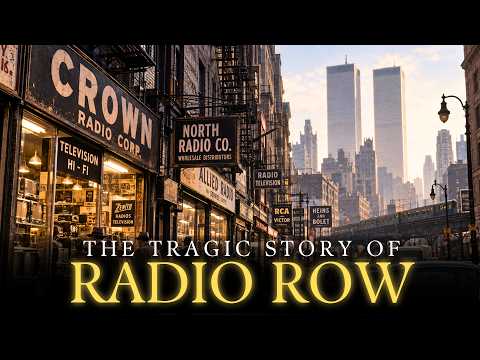
Lower Manhattan, New York
Why New York Hated The Twin Towers: Radio Row Documentary
Radio Row was America's dense marketplace for radios, televisions, surplus parts, and electronic invention. A deal to rescue a commuter railroad moved the World Trade Center directly onto its blocks.
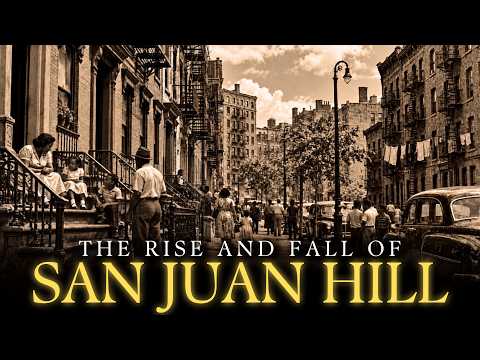
Lincoln Square, Manhattan, New York
This Famous Neighborhood Is Buried Under Lincoln Center: San Juan Hill Documentary
San Juan Hill nurtured Black music, Puerto Rican life, and generations of working families. A Robert Moses-led urban renewal project displaced thousands and delivered the cleared land to Lincoln Center.
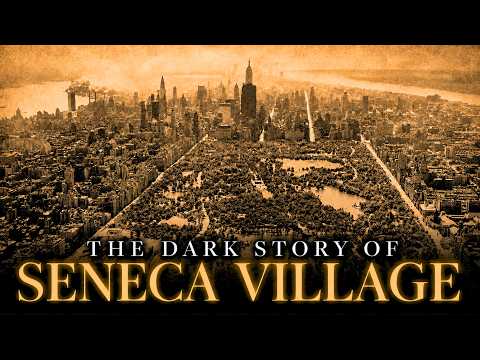
Central Park, Manhattan, New York
The Neighborhood Buried Under Central Park: Seneca Village, New York Documentary
Seneca Village was a landowning Black community with homes, churches, and a school. New York used eminent domain to clear it for Central Park in 1857, then allowed its history to disappear for generations.