
The Dark Story of America's Forgotten Mass Deportation: The La Placita Raid
La Plaza de Los Angeles, California
34.0569 N, 118.2390 W
La Plaza de Los Angeles is presented as the birthplace of the city. Beside it, Olvera Street sells food, crafts, and a carefully preserved image of Mexican California to millions of visitors.
On the afternoon of February 26, 1931, the same plaza became a trap.
Federal immigration officers and Los Angeles police sealed its exits. They stopped and questioned roughly 400 people who were sitting, working, waiting for transport, or passing through. The raid was deliberately public. Its purpose extended beyond the people detained that day: officials wanted fear to travel through every Mexican neighborhood in the city.
The La Placita raid opened one of the darkest chapters of the Great Depression, when local, state, and federal authorities pressured as many as two million people of Mexican descent to leave the United States. More than half were American citizens.
The Square Where Los Angeles Began
The plaza sits near the site of the settlement founded in 1781 as El Pueblo de la Reina de los Angeles. The present plaza was laid out in the early 19th century and became the civic and commercial center of the Mexican and early American city.
La Iglesia de Nuestra Senora la Reina de los Angeles, commonly called La Placita Church, opened beside it in 1822. The church and square remained a gathering place as Los Angeles grew around them.
By the early 20th century, the district had lost investment and many historic buildings were threatened. Socialite Christine Sterling led a campaign to transform a narrow street beside the plaza into a Mexican marketplace. Olvera Street opened in April 1930 and immediately became a tourist success.
The project celebrated a romantic version of Mexican heritage at the same moment public officials were treating Mexican residents as an economic problem.
Depression and Scapegoating
After the stock market crash of 1929, unemployment rose sharply. Politicians and civic leaders claimed that removing Mexican workers would free jobs and public relief for white Americans.
The argument ignored how deeply Mexican labor had built the region's agriculture, railroads, mines, factories, and cities. It also ignored citizenship. Authorities, employers, charities, and newspapers often treated Mexican ancestry as if it were proof of foreign nationality.
No single federal law created the mass removal. Instead, deportations, coercive repatriation campaigns, workplace raids, benefit restrictions, discounted one-way train fares, and threats combined into a system. Some people were formally deported. Many more left under pressure without a hearing.
Los Angeles became a center of the campaign because it held the largest Mexican population outside Mexico.
The Plaza With Two Ways Out
La Placita was a strategic target. The square had limited exits and served as a meeting point for laborers seeking work. A raid there would be visible, efficient, and frightening.
On February 26, immigration agents and police moved into position around the plaza. Officers blocked the exits and began demanding documents. Roughly 400 people were questioned.
The operation produced relatively few formal arrests, but arrest totals were not the only measure of its success. Newspapers reported the raid, witnesses carried the story home, and rumors spread that agents could appear anywhere.
The spectacle told Mexican families that public space was no longer safe. A church, marketplace, and plaza associated with belonging had been turned into a demonstration of state power.
The Law and the Closed Door
Mexican nationals were not barred by the Chinese Exclusion Act or the national-origins quotas imposed on many other immigrants. That did not mean immigration law was neutral or fairly applied.
Officials used entry requirements, public-charge rules, document checks, and claims of unlawful presence to detain people. Local authorities cooperated even when they lacked power to conduct federal deportations themselves.
Due process was often weak or absent. People signed papers they did not understand, accepted transportation under pressure, or left because they feared separation from relatives. American-born children traveled with deported or repatriated parents, losing homes and schools in the only country they knew.
The campaign blurred the line between voluntary departure and forced removal until the word repatriation concealed more than it explained.
Families on the Trains
Los Angeles County organized trains carrying families to the border and into Mexico. Welfare agencies described the departures as a way to reduce relief costs. Employers and officials used lists, visits, and public warnings to persuade people that leaving was inevitable.
Nationally, historians estimate that between one and two million people of Mexican descent were removed or pressured to depart during the 1930s. California later acknowledged an estimate of two million, more than half of them United States citizens.
The consequences continued after the trains left. Families lost property, wages, education, community ties, and legal rights. Some children struggled in a country they had never seen. Others spent years trying to return to the United States.
The removals did not solve the Depression. They transferred its pain onto a population selected by ancestry.
Tourism Above, Memory Below
Olvera Street continued to welcome tourists while the surrounding Mexican community lived with the fear created at La Placita. The contrast remains difficult: the city marketed Mexican culture as colorful heritage while helping drive Mexican people out.
Later generations brought the history back into public view. Artists, scholars, families, and civil-rights advocates documented the raids and forced departures. In 2005, California formally apologized for the fundamental violations of constitutional and civil liberties committed during the Mexican Repatriation.
A mural near La Placita and continuing campaigns for a public memorial connect the event to the physical place where it began.
What the Raid Was Designed to Do
The La Placita raid matters because its small number of arrests can obscure its enormous reach. It was theater backed by badges, vehicles, and closed exits. The audience was every Mexican family who heard about it.
The plaza survives. The church still serves its community. Olvera Street remains one of Los Angeles' most visited historic destinations. Unlike a demolished neighborhood, this landscape was erased by changing the meaning of a place and then forgetting what officials did there.
On February 26, 1931, Los Angeles turned its birthplace into a warning. Remembering the raid restores the people whom the postcard version of the city left out.
Previous
How America's Grandest Victorian Neighborhood Was Erased: Bunker Hill, Los Angeles
Bunker Hill, Los Angeles, California
Next
The Neighborhood LAX Bulldozed and Never Rebuilt: Surfridge, Los Angeles
LAX Dunes, Los Angeles, California
Related Stories

Lower Manhattan, New York
Why New York Hated The Twin Towers: Radio Row Documentary
Radio Row was America's dense marketplace for radios, televisions, surplus parts, and electronic invention. A deal to rescue a commuter railroad moved the World Trade Center directly onto its blocks.
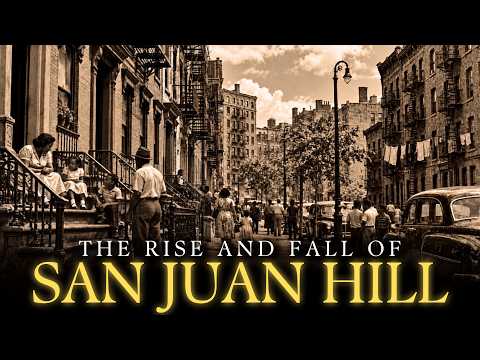
Lincoln Square, Manhattan, New York
This Famous Neighborhood Is Buried Under Lincoln Center: San Juan Hill Documentary
San Juan Hill nurtured Black music, Puerto Rican life, and generations of working families. A Robert Moses-led urban renewal project displaced thousands and delivered the cleared land to Lincoln Center.

West Adams, Los Angeles, California
The Neighborhood Buried Under the Santa Monica Freeway: Sugar Hill Documentary
Black homeowners defeated the racial covenants aimed at removing them from Los Angeles' Sugar Hill. Less than twenty years later, the Santa Monica Freeway demolished the neighborhood's core.