
Why Nobody Wants to Visit Disney World Anymore
Walt Disney World Resort, Bay Lake, Florida
28.377 N, 81.571 W
On November 2, 2001, Disney quietly closed the gates on one of its own parks and never opened them again. River Country had been Walt Disney World's first water park, a rustic swimming hole of slides, rope swings, and lake water tucked against the shore of Bay Lake. It did not burn down. It was not destroyed by a storm. One autumn it simply failed to reopen for the season, and then the next season came, and the gates stayed shut.
For almost two decades, a rotting Disney water park sat behind chain-link fence inside the most carefully managed vacation resort on the planet. Slides faded and cracked. Pools filled with algae, leaves, and black water. Vines climbed the towers. Old signs still promised fun that had ended before some trespassers were born. River Country became a strange kind of pilgrimage site because it showed something Disney normally works very hard to hide: genuine decay inside a place engineered to never show decay at all.
The abandoned water park is the visible part of a larger story. River Country was not the only thing Disney World walked away from. It is just the ruin that could be photographed.
The Old Swimming Hole
River Country opened in 1976, when Walt Disney World still felt like a different kind of resort. Its theme was the old-fashioned American swimming hole: rope swings, flume slides, sand-bottomed water, and a rougher handmade atmosphere that felt closer to a lake than to the enormous engineered water parks Disney would build later.
The centerpiece was Bay Cove, a section of Bay Lake walled off and themed as a rustic swimming area. Guests could swing out over the water and drop in the way children had done in rivers and quarries for generations. There were slides with names like Whoopin' Holler Hollow, an inner-tube ride called White Water Rapids, and a quiet nature trail through cypress trees at the water's edge.
None of it was enormous or high-tech. That was the charm. It fit an older version of Disney World: simpler, more spontaneous, and easier for a middle-class family to reach without treating the trip like a financial operation.
The Island Disney Deleted
Out in the same lake, Disney operated another attraction called Discovery Island. It opened in 1974, first as Treasure Island, and later became an accredited zoological park reachable only by boat. It held exotic birds and animals, ran breeding programs, and offered a quiet, lush counterpoint to the bigger parks around it.
Discovery Island closed in 1999 after its animals were relocated to Animal Kingdom. Then the island was sealed off and left. Years later, urban explorers who reached it found buildings collapsing under vegetation and, most unsettlingly, preserved biological specimens still sitting on shelves inside an abandoned laboratory building.
Disney eventually tightened security, but the old island remained. The name "Discovery Island" survived because Disney reused it for the central hub of Animal Kingdom. The original place, meanwhile, disappeared from guest maps and public story. The words stayed polished. The actual island was left to rot.
A Lagoon Inside The Park
There was also the lagoon that once held the Magic Kingdom's 20,000 Leagues Under the Sea submarine ride. After the ride closed in the 1990s, the drained pool sat fenced inside one of the busiest theme parks in the world until it was finally filled in and built over.
River Country, Discovery Island, and the submarine lagoon are different kinds of ruins, but together they reveal the same logic. When an attraction stopped earning its place, it could be abandoned, sealed, renamed, demolished, or overwritten. The guest might remember it as a family memory. The company saw square footage, maintenance cost, liability, and future yield.
Why River Country Stayed Closed
Disney confirmed in 2005 that River Country was finished. The practical reasons were obvious enough. Attendance fell after September 11, 2001, and an aging, small water park was easy to leave closed in a lean period. But the deeper problem was the water.
River Country's charm was that it used natural lake water. That became its liability. Warm Florida freshwater can harbor Naegleria fowleri, a rare amoeba that can cause fatal brain infection in swimmers. In 1980, an 11-year-old boy died after swimming at River Country in a case linked to that organism. As health regulations around natural swimming water tightened, a park built around filtered lake water became harder to defend and more expensive to rebuild.
So Disney fenced it off. Then, for roughly 18 years, it did nothing.
That long delay matters. Disney is not a company that forgets it owns a water park. It repaints, refreshes, and manages visible surfaces obsessively. Leaving River Country to rot was a decision renewed year after year: reviving it was not worth the cost, clearing it was not yet worth the return, and the fenced ruin could remain until the land became valuable enough for something else.
The Balance Sheet Inside The Magic
River Country was not left to decay because anyone hated it. Discovery Island was not closed because anyone despised the animals or the quiet boat ride. These choices make sense on a spreadsheet, and that is exactly the point.
The magic is the product. The affection people feel for Disney World is real, but to the company it is also an input: something to be managed, monetized, and, when the numbers say so, discontinued. River Country's rotting slides showed what corporate arithmetic looks like when it sits outdoors long enough to grow vines.
The same logic changed the guest experience in ways that are less photogenic but more important. For much of Disney World's history, the model was built around showing up. You bought a ticket, entered the park, and most of the systems inside were included. FastPass, when it arrived, was free. It came with admission.
That model has been unbundled. The free line-reservation system was replaced by paid products. Park reservations and app-driven planning changed the feel of a visit. Dynamic pricing made the busiest days cost more. Premium access, parking, dining, lodging, and line skipping became separate layers in a trip that now rewards guests who can pay more and plan with precision.
None of this is presented as a takeaway. It is described as convenience, personalization, and smarter magic. But the cumulative effect is a vacation that feels more metered, more anxious, and less open to the family that once expected to show up and wander.
The Old Promise Was Optimized Away
Walt Disney World still attracts millions of people, and many of them still have a wonderful time. The point is not that the resort collapsed. It plainly has not. The point is that the version many people miss has been changed at the foundation.
The old promise was accessibility: magic for ordinary families who saved up, arrived, and felt welcomed for a few days. River Country and Discovery Island belonged to that promise. They were lower-key, lower-cost, atmospheric places that filled out a vacation without turning every minute into a transaction.
Over time, that promise was optimized away. A publicly traded entertainment company is built to chase the most profitable version of itself. At Disney World, that has increasingly meant extracting more from higher-spending guests rather than preserving a broad, simple, affordable experience for the widest possible audience.
That shift did not happen in one dramatic betrayal. It happened quarter by quarter. The cheap inclusive pieces were allowed to decay, replaced, or priced out of reach, while the premium pieces were polished and expanded.
What Replaced The Ruin
The clearest image came in 2019. After roughly 18 years of decay, Disney finally demolished what remained of River Country. The cracked slides, empty pools, and bleached towers were cleared away. The land was not returned as a modest attraction for ordinary guests. It was prepared for a new deluxe vacation resort aimed at a higher-paying customer.
That sequence tells the whole story in dirt and concrete. The affordable old swimming hole rotted for nearly two decades. When it finally became useful again, it was because the site could support something more expensive.
Disney World is not a ghost town. It is a thriving, expensive, carefully maintained present built directly over an abandoned past. Out on Bay Lake, the old zoological island sits silent and overgrown. On the shore, the old water park is gone. Between them, tens of millions of visitors move through the polished resort each year, most with no idea they are vacationing beside Disney's own ruins.
That is the truest answer to the title. It is not that nobody wants to visit Disney World anymore. Plenty of people still do, and they are not wrong to. It is that the Disney World many people miss, the affordable and unhurried version, was quietly closed for the season and never reopened.
The magic is not gone. It has been sorted. The profitable parts are kept polished. The unprofitable parts are left to the vines, fenced off, renamed, demolished, or built over. River Country was simply the part they forgot to hide.
Previous
How One Copper Mine Built and Abandoned an Entire City: Kennecott Alaska
Kennecott, Alaska
Next
How America's Motor City Went Bankrupt: Detroit Michigan
Detroit, Michigan
Related Stories
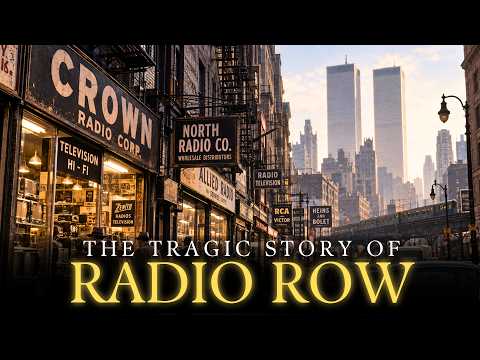
Lower Manhattan, New York
Why New York Hated The Twin Towers: Radio Row Documentary
Radio Row was America's dense marketplace for radios, televisions, surplus parts, and electronic invention. A deal to rescue a commuter railroad moved the World Trade Center directly onto its blocks.
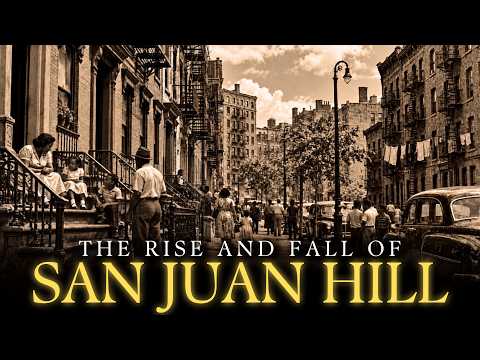
Lincoln Square, Manhattan, New York
This Famous Neighborhood Is Buried Under Lincoln Center: San Juan Hill Documentary
San Juan Hill nurtured Black music, Puerto Rican life, and generations of working families. A Robert Moses-led urban renewal project displaced thousands and delivered the cleared land to Lincoln Center.
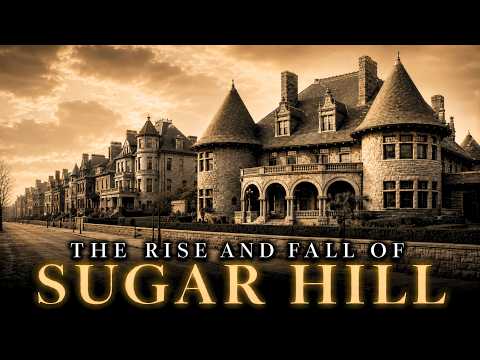
West Adams, Los Angeles, California
The Neighborhood Buried Under the Santa Monica Freeway: Sugar Hill Documentary
Black homeowners defeated the racial covenants aimed at removing them from Los Angeles' Sugar Hill. Less than twenty years later, the Santa Monica Freeway demolished the neighborhood's core.