
The World's Largest Mistake in California
Land's End, San Francisco, California
37.7804 N, 122.5137 W
At Land's End in San Francisco, the concrete ruins of Sutro Baths sit only a short drop above the Pacific. Visitors walk through broken archways, half-height walls, and open basins that still fill with tidal water, often without realizing they are standing inside what was once the largest indoor swimming complex ever built.
Sutro Baths opened on March 14, 1896, after eight years of construction on the far western edge of the city. The project was financed by Adolph Sutro, the German immigrant engineer and businessman who made his fortune building the Sutro Tunnel for Nevada's Comstock mines and later became mayor of San Francisco. He wanted a grand public attraction that ordinary working families could afford to visit.
Built To Be Unmatched
The scale was extreme. The complex contained seven pools under a glass-and-iron roof just under 500 feet long. Six pools ran on seawater drawn directly from the Pacific through engineered channels blasted into the cliff. The seventh was a heated freshwater pool. Together they held about 1.7 million gallons.
The building was designed as more than a bathhouse. It had 517 dressing rooms, spectator balconies, slides, trapeze rigs over the water, a restaurant, and museum galleries packed with collections ranging from Egyptian mummies to taxidermy and other curiosities. At full capacity, 10,000 people could use the complex at once.
Why The Numbers Never Worked
The public price sounded democratic: 25 cents for admission, including a swimsuit rental. The business model did not. Heating water at that scale cost thousands of dollars per month. The pumping and drainage systems needed constant maintenance. The glass roof leaked. The building demanded a large staff and perpetual upkeep in one of the dampest, foggiest corners of San Francisco.
That mismatch was built into the project from the beginning. Sutro got the opening, the crowds, and the spectacle, but he died in 1898, only two years after the baths opened. What he left behind was not a self-sustaining civic amenity. It was an enormous operating problem.
A Long Decline
The decades that followed were a series of cost-cutting experiments. Operators reduced heated pools, left some basins empty, expanded museum uses, and in the 1930s added an ice skating rink that briefly helped attendance. None of it solved the basic issue: the building was too large and too expensive to run at the prices it had been built around.
By the 1950s, most of the pools were already gone. Collections were sold or donated, and the site shifted further away from its original purpose. In 1964, the property was sold to developers planning a large apartment complex on the cliffs. Demolition began in 1966.
Fire, Ruins, And What Survived
On June 26, 1966, while the structure was already being dismantled, a fire broke out and burned the remaining building. Authorities ruled it arson, but nobody was charged. The apartment project collapsed soon afterward, and the site eventually passed into federal protection as part of the Golden Gate National Recreation Area.
Today, Sutro Baths survives as a ruin rather than a building. The outlines of the pools remain open to the sky. Tidal water still moves through the old tunnel system at low tide, and the surviving walls make the scale of the place legible even after six decades of exposure.
Sutro Baths Today
What remains at Land's End is a monument to overbuilding. Sutro Baths was conceived as a public wonder, but its size, maintenance burden, and low admission price made the project economically unstable almost from the day it opened. The ruin is striking because it preserves both halves of the story at once: the ambition that built it and the arithmetic that destroyed it.
Previous
Why The Government Sold Homes on Toxic Wasteland
Niagara Falls, New York
Next
Times Beach Missouri: What Agent Orange Did to Route 66
Times Beach, Missouri
Related Stories
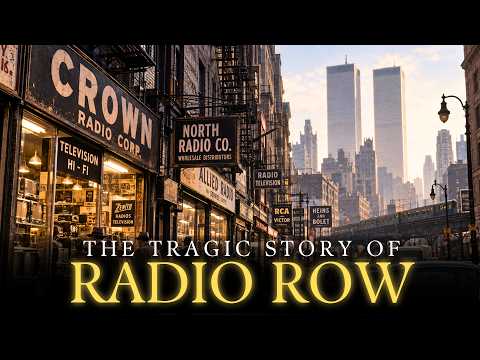
Lower Manhattan, New York
Why New York Hated The Twin Towers: Radio Row Documentary
Radio Row was America's dense marketplace for radios, televisions, surplus parts, and electronic invention. A deal to rescue a commuter railroad moved the World Trade Center directly onto its blocks.
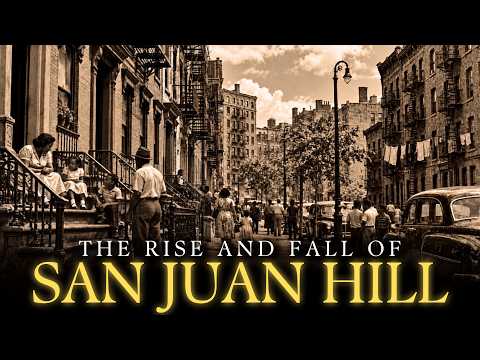
Lincoln Square, Manhattan, New York
This Famous Neighborhood Is Buried Under Lincoln Center: San Juan Hill Documentary
San Juan Hill nurtured Black music, Puerto Rican life, and generations of working families. A Robert Moses-led urban renewal project displaced thousands and delivered the cleared land to Lincoln Center.
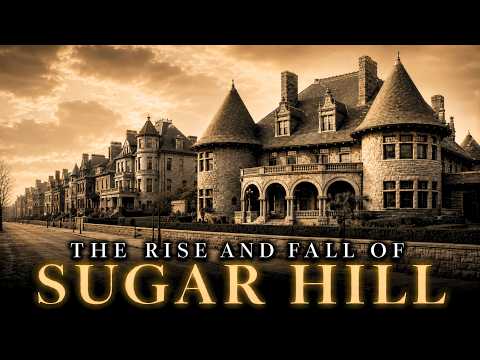
West Adams, Los Angeles, California
The Neighborhood Buried Under the Santa Monica Freeway: Sugar Hill Documentary
Black homeowners defeated the racial covenants aimed at removing them from Los Angeles' Sugar Hill. Less than twenty years later, the Santa Monica Freeway demolished the neighborhood's core.