
How One Industry Bankrupted an Entire Boardwalk City: Atlantic City, New Jersey
Atlantic City, New Jersey
39.3643 N, 74.4229 W
Atlantic City was created as a business plan. In the 1850s, investors saw an empty barrier island sixty miles from Philadelphia and realized that a railroad could turn its beach into an affordable resort for working families. The first train arrived in July 1854, carrying visitors to a town that had barely existed before the tracks reached it.
For more than a century, the city succeeded by selling escape. The Boardwalk, amusement piers, grand hotels, Miss America pageant, and famously permissive nightlife made Atlantic City one of the most recognizable resorts in the country. At its peak, it drew millions of summer visitors and called itself the World's Playground.
That success concealed a weakness that would define the city's future. Atlantic City repeatedly depended on one dominant industry, and each time that industry faltered, political leaders searched for another single business capable of replacing it. Casino gambling was sold as the final answer. Instead, it concentrated the city's economy so completely that the industry's collapse nearly took the municipal government with it.
A Resort Built Around One Market
Atlantic City's original advantage was proximity. Philadelphia was crowded and hot in summer, while the Jersey Shore was cool and reachable by train. A factory worker, shop assistant, or dock worker who could not afford an elite resort could still save for a week beside the ocean.
The Boardwalk began in 1870 as a practical way to keep sand out of hotels and railway cars. It soon became a commercial street along the beach, lined with piers, shops, rolling chairs, theaters, and enormous wooden hotels. The city kept extending its season with inventions like the 1921 bathing-beauty contest that became Miss America.
The visitor economy was profitable, but its benefits were divided sharply. Black residents, concentrated in the Northside, supplied much of the labor that kept the resort operating while facing segregation in its hotels and on most of its beaches. Kentucky Avenue developed its own thriving Black entertainment district, but the neighborhoods behind the Boardwalk never received the same investment as the tourist strip.
Transportation Created the City and Then Undermined It
The same transportation advantage that built Atlantic City disappeared after World War II. Cars and highways gave families access to other beaches and inexpensive motels. Commercial flights made Florida practical. Air conditioning weakened the original reason Philadelphians had fled to the coast during the hottest weeks of the year.
Visitors did not abandon Atlantic City in one dramatic moment. They simply returned less often. The summer season shortened, conventions moved to newer facilities elsewhere, and the aging Boardwalk hotels became too expensive to maintain. Employment losses landed hardest in the Northside, where many households depended on seasonal hotel and restaurant work.
By 1970, the city's population had fallen from a peak of roughly 66,000 to fewer than 48,000. Grand hotels were demolished, cleared parcels remained vacant, and Atlantic City entered the mid-1970s with a fraction of its former rooms and visitors. The resort needed a new reason for people to come, and New Jersey offered one that appeared impossible to copy.
Gambling Was Written Into Law as the Rescue
New Jersey voters approved casino gambling for Atlantic City on November 2, 1976. The legislation that followed treated casinos as a tool for urban redevelopment. The promise was not merely that gambling would create jobs. Casino revenue was supposed to spill into neighborhood businesses, housing, public services, and the local tax base.
At first, the results looked extraordinary. Resorts International opened on May 26, 1978, in the former Haddon Hall hotel. Crowds waited for hours, and the casino earned more than the most successful properties in Las Vegas during its first year. Caesars, Bally's, Harrah's, Golden Nugget, and three Trump properties followed.
Atlantic City eventually attracted around thirty million annual visitors and nearly 50,000 casino jobs. Gaming revenue surpassed the Las Vegas Strip. On paper, the redevelopment strategy appeared to have rescued the city in less than a decade.
The Casinos Captured the Money Inside Their Walls
The physical design of the industry prevented much of that prosperity from reaching the surrounding city. Atlantic City's casinos were inward-facing resorts connected directly to parking garages. Restaurants, bars, entertainment, and shopping were kept inside so visitors had little reason to step onto local streets.
The core customer was often a day-tripper arriving by bus from Philadelphia or New York. Casino promotions supplied gambling credits and meal vouchers, allowing visitors to move from the bus into a gaming floor, eat inside the property, and leave a few hours later without spending money at an independent business.
Local restaurants and shops were expected to benefit from millions of visitors. Instead, many competed against subsidized casino buffets and a customer stream engineered to remain indoors. Atlantic City became a place where huge numbers of people could visit without meaningfully entering the city around the casinos.
Speculation Cleared Neighborhoods Without Rebuilding Them
The 1976 referendum also triggered intense land speculation. Investors assembled casino-sized parcels by purchasing and emptying rooming houses and apartment buildings. Thousands of residents were displaced, including elderly tenants and Black families living behind the Boardwalk.
Many proposed casinos were never constructed. Owners demolished buildings and held the empty land while waiting for prices to rise, leaving gleaming towers beside blocks of rubble, weeds, and vacant lots.
New Jersey later required the industry to contribute a share of gaming revenue to redevelopment. The Casino Reinvestment Development Authority collected large sums, but much of the spending supported garages, convention facilities, Boardwalk projects, or development elsewhere in the state. Atlantic City received some housing investment, yet poverty remained among the highest in New Jersey even during the casino boom.
The Entire Model Depended on a Legal Monopoly
The casino economy worked because Atlantic City was the only legal gambling destination near tens of millions of East Coast residents. Its customers did not necessarily prefer the city. They came because no comparable casino was closer.
That advantage began to disappear when Pennsylvania legalized slot machines in 2004 and opened casinos two years later. New York, Delaware, and Maryland expanded gambling during the same period. A customer from Philadelphia who once spent hours traveling to Atlantic City could now gamble close to home.
Gaming revenue peaked at $5.2 billion in 2006, then declined every year for a decade. The city had built an economy for roughly twelve casinos, but the regional market could no longer support them all.
Four Closures Exposed the City's Finances
The correction arrived with extraordinary speed in 2014. Atlantic Club closed in January, Showboat in August, Revel in September, and Trump Plaza two weeks later. Revel had cost $2.4 billion and operated for less than two and a half years before closing. It later sold for $82 million, only a small fraction of its construction cost.
Those four closures eliminated roughly 8,000 jobs in nine months. Trump Taj Mahal followed in 2016 after a labor dispute, taking thousands more. Unemployment and foreclosures surged across Atlantic County as experienced dealers, housekeepers, servers, and cooks competed for fewer positions.
The city lost more than employers. Casinos represented most of its property-tax base, and collapsing valuations allowed owners to challenge previous assessments and win refunds on taxes Atlantic City had already spent. The total taxable value of city property fell from roughly $20 billion to less than $7 billion in about five years.
Atlantic City's credit fell to junk status as the city struggled with refunds, debt, and shrinking revenue. In November 2016, New Jersey used the Municipal Stabilization and Recovery Act to take control of the city's finances, contracts, personnel decisions, and major assets. Four decades after casinos were authorized to rebuild Atlantic City, the city could no longer control its own government.
The Industry Recovered Without Rebuilding the City
Several closed properties eventually returned under new identities. Trump Taj Mahal became Hard Rock, while Revel reopened as Ocean Casino Resort. Total gaming revenue later climbed beyond its old peak, but an increasing share came from online gambling and sports betting.
That recovery completed the logic of the original casino design. The first properties captured visitor spending inside sealed resorts. Online gambling removed the visitor entirely. Bets placed on phones across New Jersey count as revenue associated with Atlantic City casino licenses even though the money and customer may never enter the city.
Atlantic City still has around 38,000 residents and remains one of the poorest cities in the Northeast. The Boardwalk, Steel Pier, Boardwalk Hall, and surviving casinos continue to attract visitors, but vacant parcels and the flattened site of Trump Plaza preserve the physical evidence of the gamble.
The story is not that casino gambling failed as an industry. It succeeded at collecting revenue and adapting to a changing market. The failure was the promise that one inward-facing industry could rebuild an entire city. Atlantic City handed its economic future to the house, and when the monopoly ended, the city discovered how little of the winnings it had ever controlled.
Previous
Why Cabrini Green Never Recovered: Chicago History Documentary
Chicago, Illinois
Next
Sears Documentary: How the Richest Retailer in America Went Broke
Chicago, Illinois
Related Stories
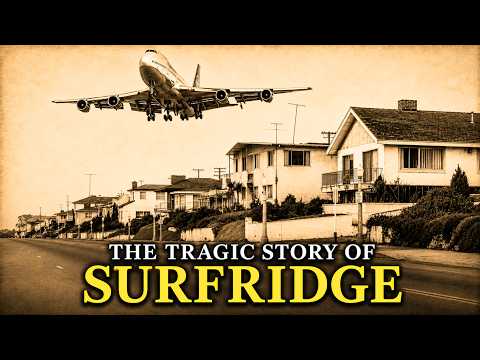
LAX Dunes, Los Angeles, California
The Neighborhood LAX Bulldozed and Never Rebuilt: Surfridge, Los Angeles
LAX bought all 822 homes in Surfridge, demolished the beach neighborhood, and left its paved streets behind in a fenced dune preserve beside the runways.

La Plaza de Los Angeles, California
The Dark Story of America's Forgotten Mass Deportation: The La Placita Raid
On February 26, 1931, immigration officers and Los Angeles police sealed La Placita and questioned hundreds in a raid designed to frighten Mexican communities into leaving.

Bunker Hill, Los Angeles, California
How America's Grandest Victorian Neighborhood Was Erased: Bunker Hill, Los Angeles
Los Angeles cleared Bunker Hill's Victorian streets, displaced about 8,000 residents, demolished thousands of homes, and cut away the hill for a new downtown skyline.